Dogon Country: Our guide, Moussa, and driver

We want to put a good word for our guide, Moussa Timbine. We arranged our trip with Bill and Lisette through a travel agency in Bamako, who in turn hired Moussa, vehicle and driver. Moussa did good job of working with our schedule which had been worked out with the agency (that is, it wasn’t totally realistic). He also dealt with working around an illness of one of our party while trekking on the Bandiagara escarpment (atlhough he could use a bit of emergency medical training–but Louisa’s Lonely Planet Medical Guide took care of that gap).

One can work with a travel agency, which may have certain additional resources and was best for us as we had little time to arrange a trip. But if you plan ahead or have more time working directly with a registered guide such as Moussa will save you a lot of money and probably be better planned. Moussa: Mobile–(00223) 907 49 35. Email– cliffadventurer@yahoo.fr. He has a great sense of humor, is a non-smoker, a good story teller and has travelled in the United States. He speaks local languages, French, Spanish, and English. He is also Dogon and therefore understands the culture and traditions of the region. He graduated from Bamako University in linguistics, and after teaching a few years did what many teachers do and went into a more lucrative field.

Our driver, Demba Niang, was equally good. I think the Toyota Land Cruiser was his.  The vehicle was in pretty good shape, good tires. The air conditioner clutch failed half way into the trip. It wasn’t that hot, but using A/C cuts the dust and after a day on a dirt road, one is dirty. He was able to quickly fix a parking brake problem on the way back from Timbuktu, which many drivers probably couldn’t. And best of all, he was a conservative driver, no white knuckling it–made the trip much more pleasant. A nice guy and always willing to help and change plans. Speaks local languages and French. Phone (00223) 695 68-98. Highly recommended. We wish them both success in their future travel guiding in Mali.

I should add a few comments based on our experience with guides on our trip. Keep checking the schedule and plans. Plans seem to get changed for no reason–well there must be a reason, but it’s hard to work around. Sometimes the plan can’t be carried out, sometimes it’s a hidden agenda and the guide wants to accomplish something else in conjunction with what you’re doing, and so forth. Lunch doesn’t seem to be essential here. If you don’t make sure it’s going to happen it usually doesn’t. In Guinea we were on a two day village visit and we bought food mainly for us, but the guide was happy to join in. On that trip we were told everything (we asked several different ways and times), but then after our nights stay in the village, he said that of course the host expected to be paid (by us). It helps to keep asking and insisting on the original plan; frequently it seemed the change in plans wasn’t really necessary. Lastly, no one every reminds you that to take photos of people you’ll to pay for the picture and small change is impossible to obtain. Those 50 and 100 cfa coins can get used up fast.

Deguembre Kanda and Niongono by Moto

On the 26th we hired two of our guide Moussa’s brothers to take us to Niongono which Moussa had said were well worth visiting.

On the way we saw an interesting little village which turned out to be named Deguembre Nanda. We were attracted by the cute Dogon graneries. We met the head of the village–a guy with a scruffy beard and tattered cloths who was ahppy to receive 500cfa (about a dollar) for our visit. He handed the coin over to one of the kids and said it would be used to buy food. When we offered to send photos he wrote his name (Hamidou Yoinogue) and address and then when I handed him my card he started reading the phone number in English. A grizzled old man in 30 person village isolated on the plains, who we assumed was illiterate could write and speak some English.

Niongono was a fantastic village perched on a small hill on the plain. Like a fortified village, but not walled off. More than a hundred houses. We paid our visiting fee to the head of the village and he supplied a guide. Dramatic with more Dogon graneries and other architectual highlights. Main detraction was the fifty kids tailling along. Hoping for handouts and we’re the only things happening in the village.

It was only 30km (18 miles) to village with almost half on pavement. But the moto ride was a bit challenging. The basic Chinese 150cc motorbikes don’t have good enough suspension and power to handle the weight of two people, espectially with me sitting behind the rear axle. I think the driver was good enough but he kept washing out in the sand (front wheel  losing control more or less). He never went over, but plenty of quick saves with a foot out. Louisa’s driver did lose it once and they both went over. Neither had sense enough to know when we should get off and walk. One particularly rough rocky piece that would have been nasty had we gone over. We asked to walk on the way back. Louisa had asked here driver to stop so she could walk. I assumed mine would stop since he was following, but instead he powered on almost hitting Louisa as she got off the bike. Also my driver had no sense that my head was six inches above his nore that my legs were further out. Picked up a sticker or two and had to duck once or twice.

The disadvantage of non-professional guides. But the villages were worth it.

Bandiagara Festival

We did visit the Monday market in Djenne. Large, but not too frenetic. As for many small towns, the market is the only place or time to buy many items as the town isn’t large enough or rich enough to support full time stores.

We dallied too long and ended up at the taxi/bus station nearly two hours late. Another hour to fill the approx 20 passenger bus. Then wait for the pasengers who had wandered off. A few miles out of town, we had to wait for the ferry crossing. Traffic backed up and then a queue fight which was quite a show with vehicles getting pushed back off the ferry and several fender benders. Arrived about 7 pm in Sevare, the trainsfer point to Bandiagara. Way too late for shared taxe. Since hotels are nearly all full and we had a reservation we bit the bullet and got a private taxi.  

But the trip was worth it as the festival was fantastic. This was the second annual. Tourism is developing well enough that towns are competing for tourists and realize that the festivals are a good attraction. Also good for the community (more on this later). We weren’t encouraged by the location–“behind the bus station.”  But the area was fenced off with some booths and about 40 chairs set up under a tent. We arrived at 3 the advertised start. We grabbed a front row seat and listened the a warm up kora player singer. There was a published schedule for the five-day affair. The same each day with different sponsors–mostly themed for the community–AIDS, women’s groups etc. They had the booths and were apparently marketing to tourists and locals.

Then a traditional dance of mostly women. We had seen essentially the same dance and people the night before at our hotel. Except by now the locals had been let in (we paid and they probably got in free) and were cheering on some of the dancers and joining in themselves. Most heart warming was a crippled guy who was one of the organizes was dancing and encouraged by the locals.

The third act was a dance of warriors. About 20 guys with muzzle loading rifles which they shot off occasionally. They acted out hunt and fighting scenes. Much better than I can describe.

Then the tour de force. The dogon masked dancers. An old apparently dying tradition, particulary in a large more commercial town like Bandiagara. About 15 men in costume and large masques. And three on stilts representing cranes. We were sitting next to two elders. People from the audience came to pay their respects and the dancers freqently bowed in front of them, so we had great seats. A grand dance–again my words fail–either |Louisa will enhance or you’ll have to wait for photos.

The festival was good on many levels. Great entertainment and insight into some of the culture; and apparently helping keep allive the traditions for the locals. The kids in particular loved it–hundreds were crowded around. And also a venue to promote community programs.

The guide books implied we would see more of this as we visited the villages–we didn’t–so the festival was great and was our Dogon Christmas. At our hotel, no recognition of Christmas. Some of the hotels are tuned in and have special dinners. 

Happy Holiday From Djenne, Mali

We wish all of you Merry Christmas and a Happy New Year.

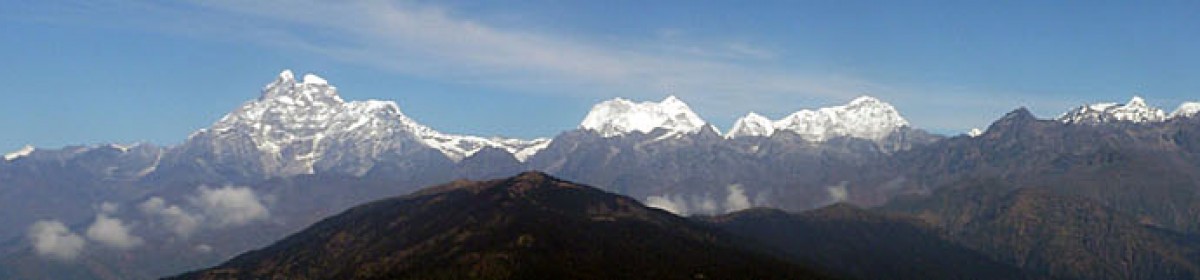
 Photo backdrop is the Bandiagara Escarpement, home of the Dogon. Yes, Greg’s hair is very short. Almost all the men get their heads completely shaved about once every week or two and I had a hard time keeping the barber from not giving me the regular treatment. Ended up with about an eighth inch of hair.

The day before yesterday was a major Muslim holiday–called Tabaski here. We went to the large prayer meeting at 9 a.m. followed by the ritual slaughtering of a lamb.  Almost all men at the prayer session. A few women at the back. It was held in a big square. Unusual for Muslim prayers, young boys took part. Everyone was dressed in their finest. Quite a show.

We’re staying here for the Monday market which according the travel guides is the best in Mali and not to be missed. Then back to Bandigara to catch a festival. We tried to catch a cattle crossing here, but when we went to the town, we found they had rescheduled earlier. We had two independent confirmations of the date–did I say this is Africa.

Then to Mopti where we plan to spend a few days, and hope to catch a boat to Segou, then to Bamako to catch Saturday night music performances. The challenge will be to find out who’s on where.

Dindefelo-late November

Another out of order posting. Chronologically, our first day in Senegal.

Everything isn’t a traveling (mis)adventure. Upon arriving in Dindefelo, we went to the first campement (usually a small complex of huts and a central covered eating area. Some are also the family compound, others are more commercial) run by Mr. Camara and his family. We were the only guests while we were there. He also is a guide, so we hired him for the next two days. He took us to the local waterfalls which were quite nice. A 100-ft. drop over shale (or similar). We then hiked up on the rim past a couple of small villages and then dropped over the edge to some large caves. There was a large conical shaped basket on a stand that was somehow used to make gunpowder–if we understood the explanation. Further around the rim and then down on another trail. The trail was rocky and steep. We had been directed by one person to go this way to Dindefelo with our bikes until his friend said it would be too difficult with bikes. We would have ended up carrying our bikes and luggage in stages. Coming up the trail were students returning home. A rocky steep climb and several kilometers to and from school. In rubber sandals of course. A nice hike and change from riding.

The campement provided us with a rather unique experience. The floor of our hut had a thin layer of concrete, but we noticed an odd dark stain in the middle of the floor. Looked like oil recently spilled. When I woke up in the middle of the night, I was surprised to find an 8-in. high termite mound being built where the stain was. In the morning the termites were gone. M. Camara scrapped off the mound and poured more oil or poison down the little holes. And then put a thin layer of concrete over the area (without thoroughly cleaning the mud off). When the concrete dried there were still small holes which the termites used the next night for trying to rebuild their mound. Didn’t get as far since they had less access. The mound looked like a mud sponge.

The next day we packed up and Monsieur Camara borrowed a one-speed and we headed to Ibel, 20 km away across the plain. Good biking. Small roads/trails with little sand. At Ibel we parked our bikes and headed a small mountain to a Bedick village. The Bedick are another tribe that hid in the highlands from Moslem invaders. About 900 ft. above the plain and they had to carry water up to the village. The village (and another Bedick village we visited) appeared to be losing population. No wonder with no water and poor soil. The Bedick have a beautiful architecture for their huts. And the few people in the village (depopulation and people working in the fields) showed us some of the traditional grain grinding methods and clothing. Interesting and depressing at the same time–because they’re basically performing for tourists while losing their way of life. Although it’s a tough life and life on the plains is probably easier.

We then continued down the main road to a another campement.The campement was nice but the hostess at Chez Liontine was rather charmless, but maybe it was because she was also nursing an infant and running the campement. Every women of child bearing age seems to be carrying a child on her back.

Timbuktu

Yes, we are at the edge of the world. Although the town is not too exciting, it is interesting to walk out on the dunes and see the Tuaregs and camels and realize that there are still camel safaris carrying salt slabs from the desert to here and Morocco. And bringing back dye for the blue fabric loved by the Tuaregs. We arrived after an all day drive which included six hours on a dirt road crossing the sahel. Air conditioner in the SUV not working so everything is dusty. Along the way we saw at least a dozen donkey trains carrying grains from the main road to the desert villages and presumably Timbuktu.

We spent four days in Dogon country on the Bandiagara escarpment. The Dogon have lived in the cliffs for centuries for protection from the Muslim invaders. They didn’t leave there cliff dwellings until after WWII, when the French assured theirsecurity. In turn, the Dogon had driven out the Tellim people. The Tellim and Dogon have build incredible graneries and burial structures in the cliffs. Much more elaborate than the Anatazi dwellings of the south west.

After just 24 hours here, we’ll be heading off at noon to get across the desert while there’s light. Then off to Djenne where we will go to a Fula cattle crossing. Bill and Lisette will leave from there to Bamako, and we’ll stay out in the Mopti/Djenne area until early January.

Bamako, Mali

Finally back to a place with 24-hour power, hot showers, comfortable beds. Bamako is the most properous city we’ve been to on this trip (not counting layover in Casablanca. First thing we noticed were many private cars, not just fancy ones of super rich and NGOs, but compact cars for “middle” class people. Also more descretionary items for sale. Not to say there isn’t rampant poverty, just better than anything in Guinea and eastern Senegal. Presumably western Senegal is better off than here.

We’d had some further travels adventures, seen some beautiful sites, and been generously hosted. Details to come.

We have a phone in Mali: (223) 400-1598. You can leave a voice message–we can retrieve them.

We’re first trying to work out with our friends Bill and Lisette  join travel plans. They aren’t here as long. Outline is to hire a car and driver. And although we generally avoid that; travel here is tough enough that we are quite willing to entertain the idea.

Kedougou-last day in Senegal.

Here at the local Cyber Cafe. Most of the users are young boys, ten to 14 years old playing car and truck driving game, but I see one or two other games being played. The computer I always use (because it’s the only one with a US keyboard) has next to it game playing kids. Typically two kids manning the controls and two or three observers. At least today the owner is chasing some of the ones pressing against me away; but he’s only having partial success, they quickly reappear. The owner preparing an invoice for a customer, i.e., a word processor operator. And we’ve seen two or three Peace Corps volunteers who’ve come into town apparently for a meeting at the local headquarters. We talked to some of them. Three who bicycled 50 km or so from their villages. They spend three months just learning the local language and getting familar with the local culture before starting their projects.
We’re staying at the Chez Diao which is about 300m from the central market on a larger dirt road. Fortunately not on one of the main through roads (although we probably wouldn’t have stayed here if it was). Five or six huts with shower and sink, but shared toilets in a separate building. Meals in a covered but open area, much like you’d find in Mexico. Showers are cold, but not bad here as it’s hot and water isn’t too cold.
Last night we went to the Relais Kedougou for dinner as suggested by the Peace Corps volunteers. The Relais is fancy place with gardens and is a bit out of town and about three times more expensive than our place. We had western style meals which was a real treat. Baguette with butter–first time we’ve had butter. Sometimes margarine at breakfast, but never butter or with dinner. Then tomatos, shredded carrots with mustard vinagrette dressing. Wow, so many fresh vegetable. We ate it all. Some concern about risk from fresh vegetables; but the fact that there is city water, general cleanliness, and the fact that it is a hotel catering to higher end clients gave us confidence. And we feel fine today, so apparently OK. Followed by chicken in Louisa’s case and wild warthog in mine. The warthog is supposed to be like wild pigs, so tasted like pork roast. Tasted great and was probably more meat than we’ve eaten total in the last two or three weeks. Served with a large portion of green beans. Apple tart for desert in my case, and water melon, banana, and orange it Louisa’s. A real treat after a month of simple maafi, rice, baguettes, etc. Of course we’ve had some other good food, but this was a nice change.
As I mentioned before there don’t seem to be any trash pick up here; but yesterday some residents were gathering up and burning the trash collected along the street, but outside their compound walls. The smoke and dust from mostly dirt roads was thick last night.
Found immigration yesterday. One guy sitting under a tree near a sign that said halt. We’d walked by it but hadn’t realized it immigration. We were told that was the place at the police station about 100m beyond. The guy gave us some minor grief for not having checked in in Segou, the first town we were in in Senegal. Segou was about five building, none marked officially in any way. We had talked to several people in town buying lunch and food supplies asking directions; they all knew where we’d come from and they didn’t say anything about immigration. But the official did stamp our passports (no visa required for US citizens). He may have been upset that we’d been in country for a week without checking in too.
While walking to the Cyber Cafe yesterday we decided to come by way of the mosque which we could see. Louisa saw some old guys sitting near the front under a giant baobob tree waiting for prayers that would begin shortly and seripticiously took some video. We then walked by and they greeted us. I asked about taking a photo and they were happy to oblige. Asked us to send a copy via the Imam.
Tomorrow up early for our two leg journey to Mali (the country). Both legs are about four hours. Even if we make in time to Tambacounda there’s not assurance we’ll find a taxi leaving midday, but it’s the main road crossing Senegal which connects to the main road in the western part of Mali. With luck we’ll be in Kayes, Mali tomorrow night.

Un sept place jour

In chronological order this should appear before Louisa’s post on Mali(ville) to Senegal.

We had spent our couple of days in Labe catching up on email, Internet, eating, and washing; and we were ready for our trip to Mali-ville. We knew the routine–get to the taxi stand early. Even though it is only a four-hour trip, in general people arrive by 8 am to assure a place on the taxi. Later it takes a while to fill the taxi. The shared taxis only leave when full, even it means waiting hours.

A sept place is 30-year old Peugot station wagon with three rows of seats. The seven places are one passenger in the front, and three each in the next two rows. Children in laps don’t count. But in fact there are two or three passengers (plus driver) in the front. Yes, with bucket seats. Four in the second row and three in the back row for typically 11 total .

So we got up early enough for a quick breakfast and pack our bikes for the ride to the taxi stand (gare routier). Breakfast was the typical baguette with jelly; and Nescafe, sugar, and a artificial cream. However, we got involved talking Ruth, the poli sci student. and it was nine before we departed. But it’s only a four-hour trip and we have all day.

For some reason the taxi stand for heading north to Mali is 3km out of town in the next village, not at the main taxi stand. But we’re on bikes so it’s an easy journey. We arrived at the gare at about 9:30 found the ticket seller, negotiated the price for our bikes and luggage–the passenger fare is fixed. The fare was about $5 each and about the same for luggage. We asked how many places needed to be filled and were told three. So we found a comfortable place to sit, watched the coming and going including the apparently crazy guy who was listening the news and repeating it loudly for all to hear. Shortly after noon, we decided to give up and pay for the other three places at about $5 each (22,000GF). We were issued the additional tickets and final loading commenced. They had waited until ready to go since our bikes had to be on top of the other stuff on the roof which included other’s luggage (usually in plastic bags) as well as stuff being shipped. But then another passenger showed up and his father spent about ten minutes discussing buying the ticket with the ticket seller. Finally we handed over one of our extras and were handed his fare.

Baggage rearranged and the taxi heads off in the wrong direction without us; minor panic, but assumed just going to buy gas for the trip. He then came back and passed us by on the main road, but then parked a hundred feet up the road under a tree. Then the driver and ticket seller got into a discussion about the number of passengers. The arrangement at many gares is that the taxis are independent operators, and the ticket seller controls the taxis and gives the major portion of the fare to the driver (at least this seems to be the routine). They counted heads, looked at our tickets several times. It seemed the ticket seller had sold one extra place, but our two extra places were confusing the issue. He finally took one of our tickets and I asked about the money for it, but a well dressed passenger said don’t worry, you’ll get it. We were tired of waiting, and the Guineans had been very honest, so I kept quiet. So we’re all set to go and the driver announces time for Muslin prayers (it’s about 1 pm by now), so we get out and sit under a tree and eat our lunch. Which is our typical baguette with a Vache Qui Rit–a frequently available soft bland cheese and canned sardines, bananas, and cookies.

Half an later the driver and maybe one other passenger who went to prayers show up and we’re off. One advantage we had was that we had taken the larger middle row and had one extra seat, so not uncomfortable. About two hours into the trip the driver pulls off the road and says something needs to be fixed. Raises the hood and shows a cable and housing. I look at the throttle cables and they look OK, so assumed a clutch cable which apparently it was. Fortunately he stopped next to a bridge over a nice little river. Watched a few people hanging out at the stream&mdashprobably had bathed. A bit of local foot traffic; some who stopped to get a drink or wash up. The three women wandered off and gathered leaves which they said were medicinal and not available in their village. Two of them were dressed in Western clothes–coming from Labe or some other large city and heading back to their small village. I took pictures of the people and river; and kind of got into the mood of the trip. Reminded me of some movies where similar breakdowns happen and the well dressed Europeans retire under a tree and wait patiently or play games. Not quite as gentile, but it seemed we still had plenty of time to arrive at our destination well before dark. The road had been a good dirt road. We traveled at a reasonable speed–our driver seemed to enjoy living and wasn’t a speed demon–made the trip better. Not much traffic either.

All fixed after about an hour and we were off. But then the road deteriorated as we were climbing. We saw some road work earlier repair work, repairing the rain damaged section. The rainy season lasts about six months with rain just about every day in the middle two month–June and July. Stopped to let the two women off in their village which was right along the road. People came out to greet them and help them with their luggage. Of course this required removing the bikes and we supervised reloading as always to make sure the derailleurs weren’t crushed. Dropped a couple of other passenger along the way.

Arrived in Mali about an hour after dark. As we approached the town we told the driver the small hotel, Auberge Indigo, we wanted to stay at and he implied he would get us there. We assumed it would be close the center of the small town. Everyone unloaded and the driver talked to someone who came to pick up his package from the driver. He volunteered to get in and show the driver the way. After about three blocks, we were going about 1 mph picking our way uphill over a rocky washed out road. As it was late and we were hungry I figured we were getting the extra fare we were owed back. After about ten minutes we saw the sign and what appeared to be the hotel. The arrow pointed to the right but the volunteer said no to the left. The driver asked a couple of kids and they pointed back to the right. The driver and helper were insisting on going left. We finally convinced him to go back to the right. Upon arriving someone came out to open the gates and assist us in. The young receptionist showed us a room. We asked about food and he said there was none, but that he’d walk us to town to a restaurant–a good one.

We said good-bye to the taxi driver who was trying to get the taxi started. It had stalled, as it had several times on the trip, and significant fiddling was required to bring it to life again.

The restaurant turned out to be the local “sports bar.” A maybe 10-ft square room with benches and three small tables. Guys sitting around drinking coffee, smoking, and listening to hip-hop music; without much talking. The TV was off—no soccer games on presumably. Our host shooed some young boys off a bench. A menu of about two items. We picked omelets and tea. Then off the small markets that were still open to get bread and Vache qui rie for breakfast. No bananas or other fruit at the late hour. Back to the hotel. Our host saw we were comfortable and then hopped on his moto for a night on the town. Probably back to the sport bar. We washed our faces and hands in the bucket shower. Complete bucket shower would wait until tomorrow when it wasn’t so cold and late. Waiting was good as the auberge had a small kitchen where you could heat water for bathing.

Traveler’s note: Auberge Indigo was pleasant and quiet. We saw no signs of the new hotel that was supposed to be opening soon in town. The town seemed to maybe 2000 people.
Crossing the Border and Peul hospitality

Our journey cycling from Maliville, Guinea to Dindefelo,Senegal redefines the term “death march”. At 8 am we left the Auberge Indigo heading north.In the beginning the road descending off the Fouta Djalon Plateau was fairly easy, intermittently sandy, gravely and smooth then volcanic rocky sections. We past through a few small villages as we decended in steps down the mountain. Then we saw no villages. An hour past and no one was seen any where. The track became steeper and looser with broken rocks and babyhead rock gardens. We were told this was the “International Route” and possible to cross the border in one day on bikes. This road or track showed no vehicle tracks, only foot prints and maybe a moto track. It soon became steeper yet and over grown with tall grasses. We dropped about 1500 feet in elevation on this track that wound through forested areas with bamboo and giant termite hills then open savannah then back into the woods again. More rocky decents that I would consider to be intermediate technical mountain biking. Only we had about 35 pounds on the back of the bikes. My rear rim had been smashed on the conveyor belt at the airport and we rebuilt the wheel in Kindia. Only the hub had 32 spokes and the new steel rim has 28. Truing the wheel perfectly was not possible rendering my rear brake almost unusable. I got off and walked the worst rock sections while Greg, less risk adverse, rode the rock ledge drops and broken rock sections. Several river crossings, pea gravel, sand sections and brief downhills later it was 5 pm and two hours of day light left and no border in sight. We ran out of water and had to ask at a village to draw water from their well which they graciously did. We were being bitten by deer flies and army ants that I stepped into at a river crossing so we slathered on DEET and continued to push on in hopes of hitting the main road. Fifteen minutes before darkness we came to a Peul village. We were not going any further. We entered the fenceline of the village compound and asked two young men if we could stay there for the night and if they had any food. They responded affirmatively and showed us the way to their hut which was a traditional adobe and rattan round Peul hut with a rattan porch area with bamboo beds. The Diallo brohers gave up their hut, about 15 feet diameter, with a full size bed and fonio straw mattress on one side and two stacks of 100 lb. bags of peanuts to the roof line on the other. They had no food but made some powerful boiled green tea with lots of sugar for us. We gratefully accepted a bucket of water to wash off the sweat, dust and DEET and fell asleep after eating the last of our cookies, one Vache Qui Rie and a Clif Bar. That is Peul hospitality. On Djarama Bwe. When morning came we found that we were at the village on the border and had to have our visas signed to exit and fifty feet beyond there we had to go through customs. We were at last in Senegal.